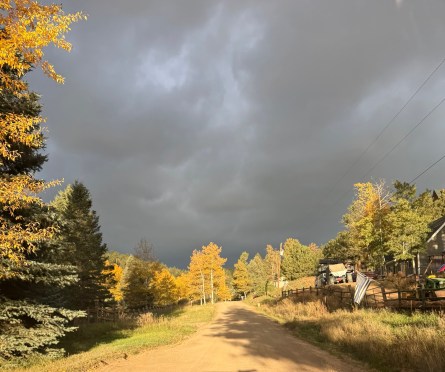
In last week’s post, I reported that temperatures were steady for the foreseeable future. But after taunting Mother Nature, she’s proved a little moody (understandably so—MY BAD). As a gardener, this might come as a shock, but my favorite season is actually winter. The incoming storm—complete with a chance of snow—has me feeling exactly like Michael Scott:

This first potential snowstorm is on track to bring a decent freeze. Even at my elevation, the ground is still a bit too warm for a deep soil freeze, but roots and tender, non-frost-tolerant plants need protection right now, or they will be sacrificed to Jack Frost. Since the soil will still be workable after this temperature dip, it’s time to pivot from less urgent tasks (like soil rehab) to immediate action.
As much as a “Frost Fortress” sounds like a foolproof strategy, every gardener eventually has to face the ultimate horticultural truth: things will not go as planned. Yes, even after pouring your blood, sweat, tears—and the occasional magical potion—into the dirt, sometimes it just won’t work out. Plants die. They get eaten. They get smashed. They freeze. They wither away out of what feels like pure spite, and we simply cannot save them all. Heartbreaking— I know.
But that is the bittersweet magic of working with nature. You get to dance to the rhythm of the seasons and learn to love the garden not just in full bloom, but in its quiet fade. So, Channel your inner Elsa and let it go.
PHASE ONE: The Plant Protection Program
For most of us in Colorado—especially those at higher elevations—the growing season is coming to a close. Locations like the Denver Metro and surrounding areas have already enacted winter watering restrictions that started October 1st. Because of this, it’s important to carefully consider which plants to protect and which to let go.
Take squash, for example. It’s a warm-weather friend and extremely prolific. I wouldn’t be surprised if you’ve already shared hundreds of squash with your entire neighborhood and still have a surplus (yes, I’m speaking from personal experience). This is probably a plant we can let Jack Frost take. Plus, it means you can finally stop leaving squash on windshields because your neighbors have stopped answering the door when they see you coming with yet another basket.

As a general rule, consider your plant’s hardiness and how long it takes to produce before deciding who to save. Most plants fit into three main categories:
- Tenderonies (Veggies, Fruits, Herbs, and Annuals): These plants have zero frost tolerance. Ice crystals will form in the plant cells, turning the green bits into a squishy brown mess. Cover these, move them into a protected space, or harvest what’s ready and leave the plant to decompose and feed your soil.
- Semi-Hardy Crops and Greens: These can handle a brief, light frost but will suffer damage if the cold snap is prolonged. Keep an eye on the forecast. If temperatures drop into the mid-30’s, throw on a row cover.
- Cold-Hardy Plants: These thrive in cold weather and may even taste better after a frost. Root veggies, brassicas, cabbage, spinach, and collard greens can be ignored and left to do their thing.
On our slice of land, I have decided to let most of our plants fend for themselves. The energy I have left needs to be concentrated on rebuilding soil. Not to brag or anything, but most of my in-ground crops and flowers are native and frost-tolerant.

However, I do keep quite a few “free-range” annuals in containers, and the most delicate will be moved into the heated greenhouse. Seemingly just to spite me, my hanging baskets full of Morning Glory vines and Marigolds have finally begun to do what I have requested of them all summer. Their vines have beautifully tangled and twisted into the arbor. The leaves are stunning, some as large as my hand! Trust me, I want to save them, but removing them without destroying them is nearly impossible.
I also have many random pots in the shade garden that are probably too heavy for me to move on my own. So, I’ve narrowed down the chosen few I want to rescue and will wrangle them into the shed to the best of my ability.
Protecting Roots and Insulating the Soil
Now that we have determined which plants need assistance, let’s talk about next steps for leafy friends we want to save but can’t easily evacuate. Before a frost or a cold snap, give your plants a good—but not excessive—hydration. Water fills the tiny air pockets in the soil and slows down the rate at which the cold reaches the roots. Additionally, well-hydrated roots keep the plant cells plump and better able to tolerate frost above ground.
- Timing is Everything: Water in the afternoon, preferably at the warmest point of the day right before temperatures drop. Pour the water directly into the soil or container. This keeps the above-ground bits and pieces from getting wet and potentially freezing.
- Avoid Over-saturation: Don’t overdo it. Too much water—especially in poor soil—can starve roots of oxygen. In turn, this can cause root rot or contribute to the very freeze damage you are desperately trying to avoid. Celebrate the coming of winter by giving your plants a glass of water instead of a full pitcher.
Covering the Chlorophyll Crew
When it comes to covering plants, the options can be truly overwhelming. My best, most practical advice is to use what you have and don’t overcomplicate it. That said, you will want to consider exactly how you are going to hold down the fort—literally.
- Plastic (Proceed with Caution): Plastic is usually discouraged because it acts as a conductor, transferring the cold quickly and directly to the plant if they touch. However, if plastic is your only option, it can work in a pinch—as long as the plastic and the plant, like star-crossed lovers, never actually touch.
- Fabric (Your Best Bet): Throwing old bedsheets, towels, or blankets over your plants can do the trick. Just be careful that the fabric isn’t so heavy that it smashes the very plants you’re attempting to rescue.
- Row Covers and Frost Blankets (The Luxury Option): If you’re like me, you never seem to have these on hand when you actually need them. Where I live, even two-day shipping isn’t a thing, so I rarely recommend buying these for an unexpected frost event. If you’ve got ’em, use ’em!
So, tuck in your surviving leafy friends, wish the stubborn ones good riddance, and take this frosty opportunity to cozy up inside. After all, the cold never bothered us anyway—at least, that’s what we can tell ourselves until the seed catalogs start pouring in.
Leave a Reply